現場でAIを実業務に組み込む中で得た知見:AIネイティブ設計、FDEメソッド、エージェント工学、そして率直な導入の振り返り。6AM TECH がお届けします。
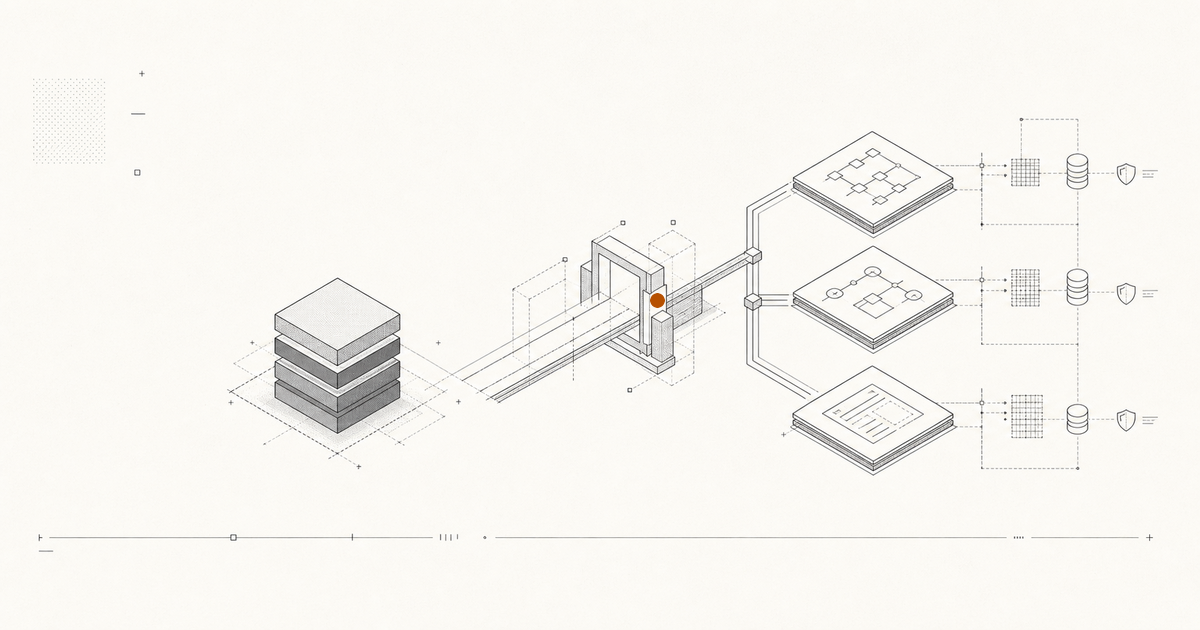
The model is no longer what keeps enterprise AI agents out of production — the integration layer is, and MIT finds 95% of GenAI pilots still deliver no measurable P&L return. Here's how the new stateless MCP specification and a data-supply governance core close the gap, and how to choose between hardwiring legacy systems, standardizing on MCP, and forward-deployed engineers.
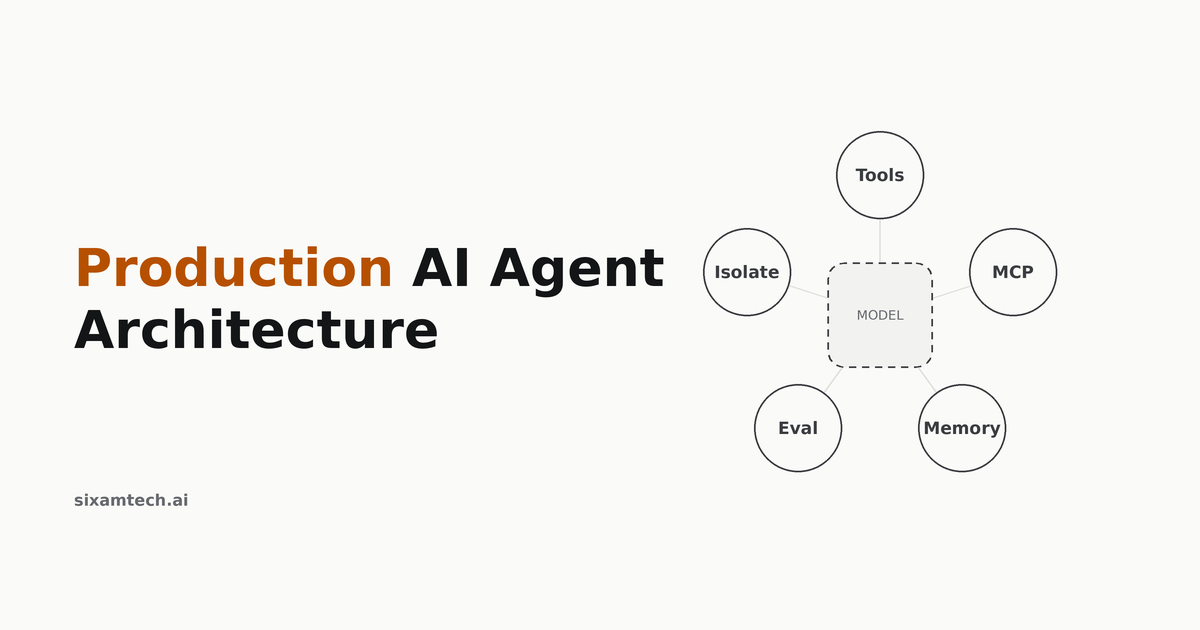
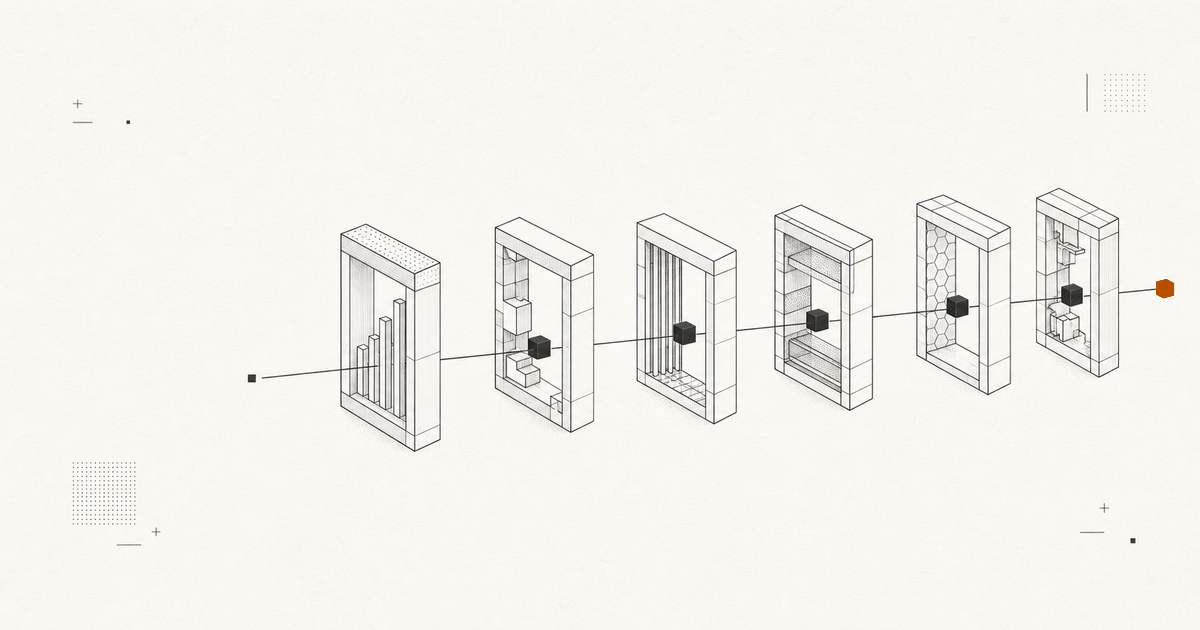
Most enterprise agents die between the demo and production. Two fresh first-party cases — DoorDash's "Ask DoorDash" assistant and the Allen Institute's Shippy — show the gap isn't which model you picked. It's the five engineering things around the model: deterministic tools, an MCP layer that decouples orchestration from business logic, layered memory, evaluating the agent (not the model), and an FDE-style split between domain and platform teams. Here's the reference architecture, with the numbers.
In 2026 a growing argument in enterprise AI is that the contest is no longer about who has the strongest model, but who can close the loop from tokens to business value. That's where the AI Forward Deployed Engineer (FDE) comes in — an on-site delivery model that vendors like Runjian price on the value it actually creates. Here's what an AI FDE is, how it compares with traditional outsourcing, and what verifiable, auditable delivery looks like in practice.
An AI agent is not a more expensive chatbot—it is a different cost curve. Because every reasoning step re-sends its context, agents burn 10–100× more tokens than chatbots, and the token bill is only the visible layer. Here's the mechanism, the three hidden costs enterprises miss, a self-build vs. platform vs. FDE comparison, and a four-lever governance playbook that cuts spend 50–70% within two weeks.
WAIC 2026 made one thing clear: the bar for enterprise AI has moved from "can the model answer?" to "can it finish the job and be paid on the result?" This is a practical guide to the delivery closed-loop, the training-vs-inference budget question, and the AI FDE (Forward Deployed Engineer) model that ties tokens to business value.
AI agent security is not software patching. Autonomous decision chains, a non-human identity explosion, and supply-chain write access make agents a new attack surface. Here is how enterprises secure them in production—with least privilege, NHI governance, bounded exploration, and evidence governance—grounded in the July 2026 Hugging Face intrusion, Cyera's $1B Oasis Security deal, and hard benchmark data.
Small businesses and one-person companies adopting AI in 2026 have three real paths: build in-house, buy a general agent platform (Nano Work / ChatGPT for small business), or hire a forward-deployed engineer (FDE). A cost / speed / control / scale comparison table shows exactly which one fits — and where each hits a wall.
Most enterprise AI agents never reach production not because the model isn't smart enough, but because strategy, data, and safety break down first. Gartner expects 40%+ of agentic AI projects cancelled by 2027 and, per Gartner (via FutureAGI), 85% of AI projects never reach production. Here are the 6 root causes—and how forward-deployed engineering fixes each.
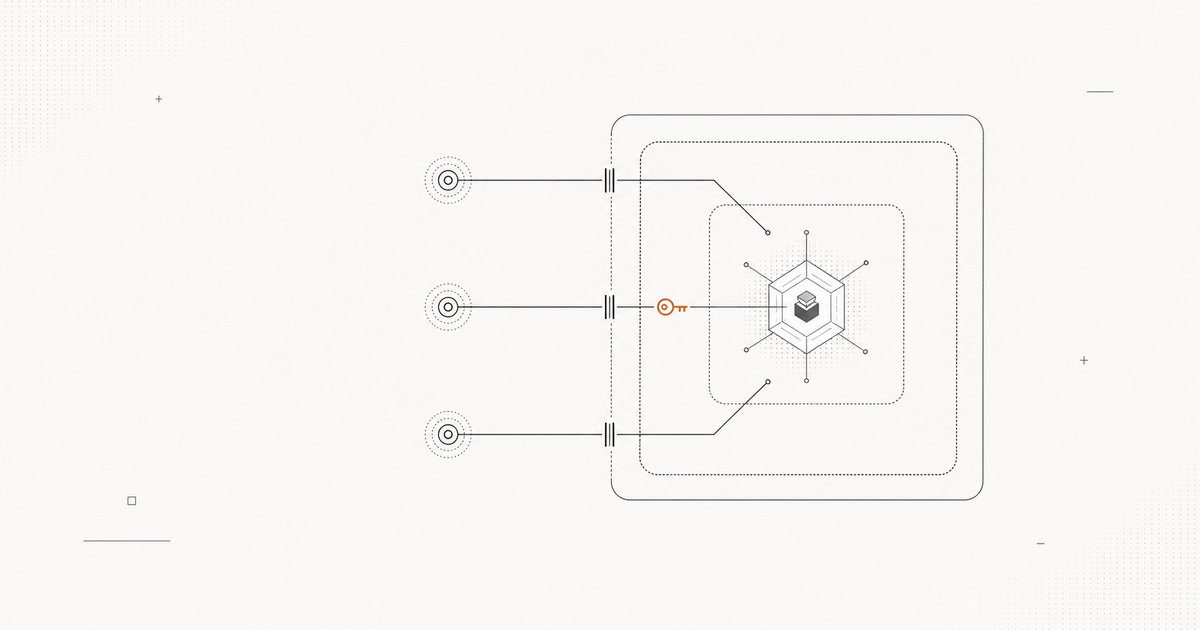
Every AI agent you deploy is a new hire who just got the keys to your systems — but one you never onboarded, never gave an MFA prompt, and can spin up many copies of near-instantly. As agents proliferate, their "non-human identities" have become the enterprise's newest attack surface. Here is an FDE-grade playbook for governing agent permissions in production: give every agent its own identity, grant least privilege, authorize each tool call, keep a human in the loop for high-risk actions, and log the whole decision chain.
Once you run AI agents in production, every agent becomes a non-human identity (NHI) you have to govern — and the security boundary shifts from "a person logging in" to "what identity an agent holds, what it's allowed to do, and whether its behavior is monitored and auditable." Here's the four-part governance framework, grounded in this month's $1B NHI acquisition, a real 17,600-action agent intrusion, and how the big vendors are already fighting agents with agents.
OpenAI is delivering its new Presence product through Forward Deployed Engineers rather than a self-serve API — a signal that enterprise AI-agent delivery is moving from "sell an API" to "embed on-site." We unpack the shift and give you a four-factor framework for choosing between a model vendor's FDE team and an independent implementation partner.
When an AI agent goes wrong, it doesn't say the wrong thing—it *does* the wrong thing. That single distinction is why enterprise agent platforms succeed or fail on engineering, not on model IQ. Here are the six deployment requirements—cost, setup, permissions, reliability, security, and continuous evolution—and how 360, GitLab 19.2, and Meta each answer them.
AI agents that can act on their own are simultaneously a new attack surface and a machine-speed attacker. This guide breaks down what actually changes when you put autonomous agents into production — non-human identity, permission scope, isolation — and gives you an FDE-grade governance checklist, grounded in a $1B security acquisition and a documented 17,600-action agent intrusion.
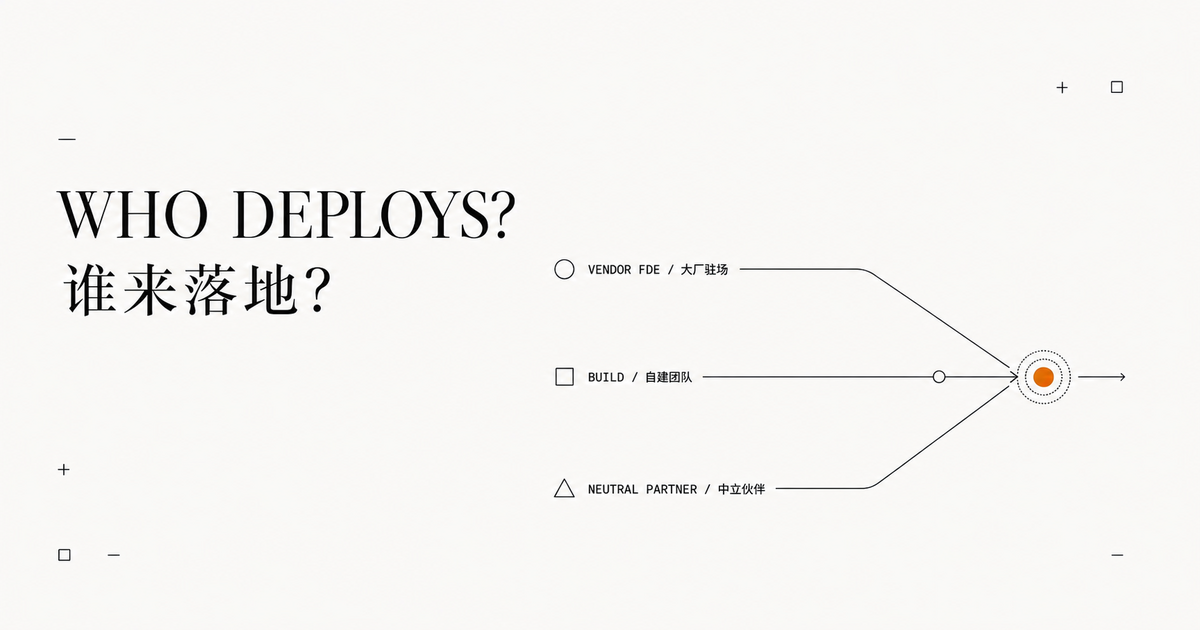
OpenAI now sends its own Forward Deployed Engineers on-site to stand up enterprise agents through a product called Presence. That quietly turns "build vs. buy" into a three-way decision—AI lab, in-house team, or independent partner—and the right answer depends on control, lock-in, and whether you've built the evaluation and governance to run agents in production at all.
OpenAI won't let enterprises buy its new Presence agent off the shelf — it deploys only through Forward Deployed Engineers and systems integrators. That decision is a signal: as models commoditize, the hard part (and the margin) moves to deployment. Here's what the FDE shift means, and how any company can reuse the playbook.
A comparison-table explainer of how the AI FDE model differs from outsourcing, license sales, and consulting — grounded in named 2026 enterprise data.
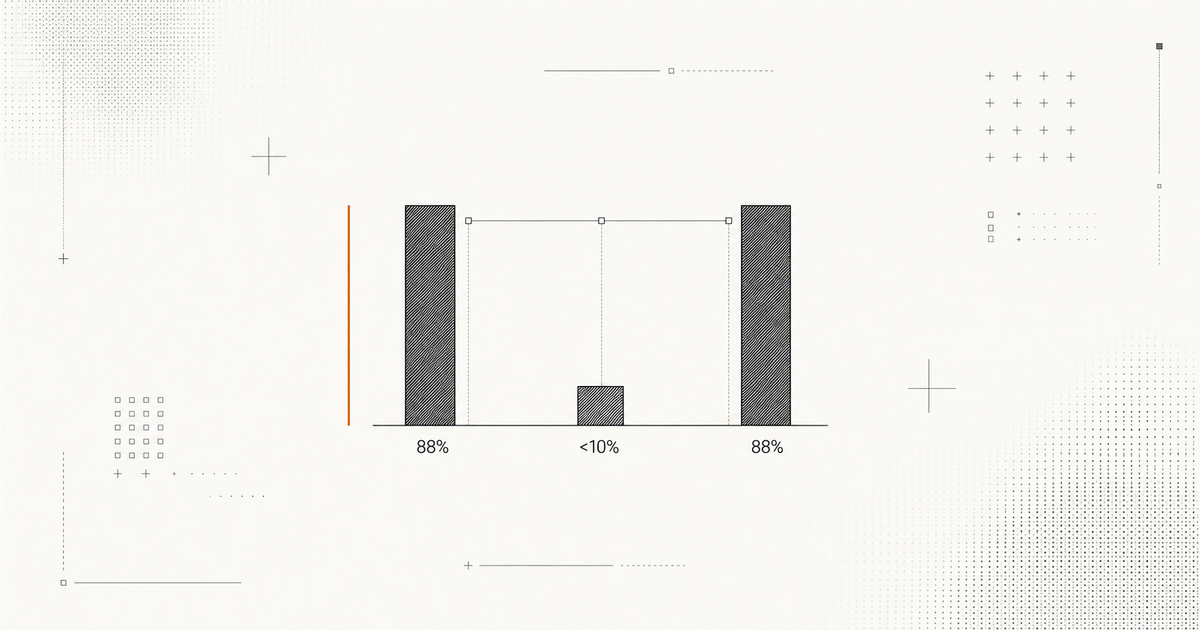
In 2026, enterprise AI is wide adoption but narrow production: 88% of organizations use AI, yet fewer than 10% scale an agent in any single function and only 39% see ROI — while a separate 88% of agent pilots never reach production. A data-driven reality check that keeps the two 88%s apart, plus the path into the 12% that actually ship.
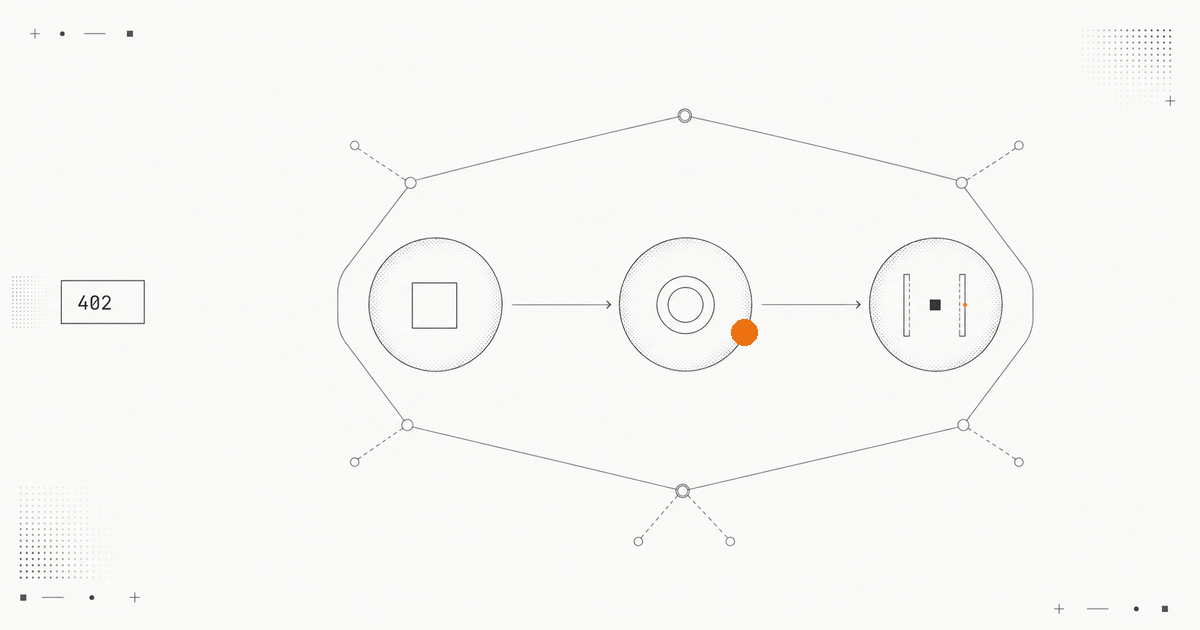
In one week, AWS and Cloudflare both put the x402 agent-payment protocol into their edge networks — AI agents can now settle in USDC with no account and no API key. The infrastructure layer is now largely built for you. The part still unowned — invoices, VAT, and compliance for machine-to-machine payments — is the part your enterprise has to build.
Most production AI agent failures are misdiagnosed. When an agent seems to "get dumber," it's usually configuration drift — not a weaker model — and when one deletes a database, the root cause is over-broad permissions plus no immutable backup. Using Anthropic's own 6,852-session analysis (as reported by 36Kr), an InfoQ case study on Snowflake's WORM last line of defense, and real migration data from ploy.ai, we lay out a four-layer reliability model for running agents in production.
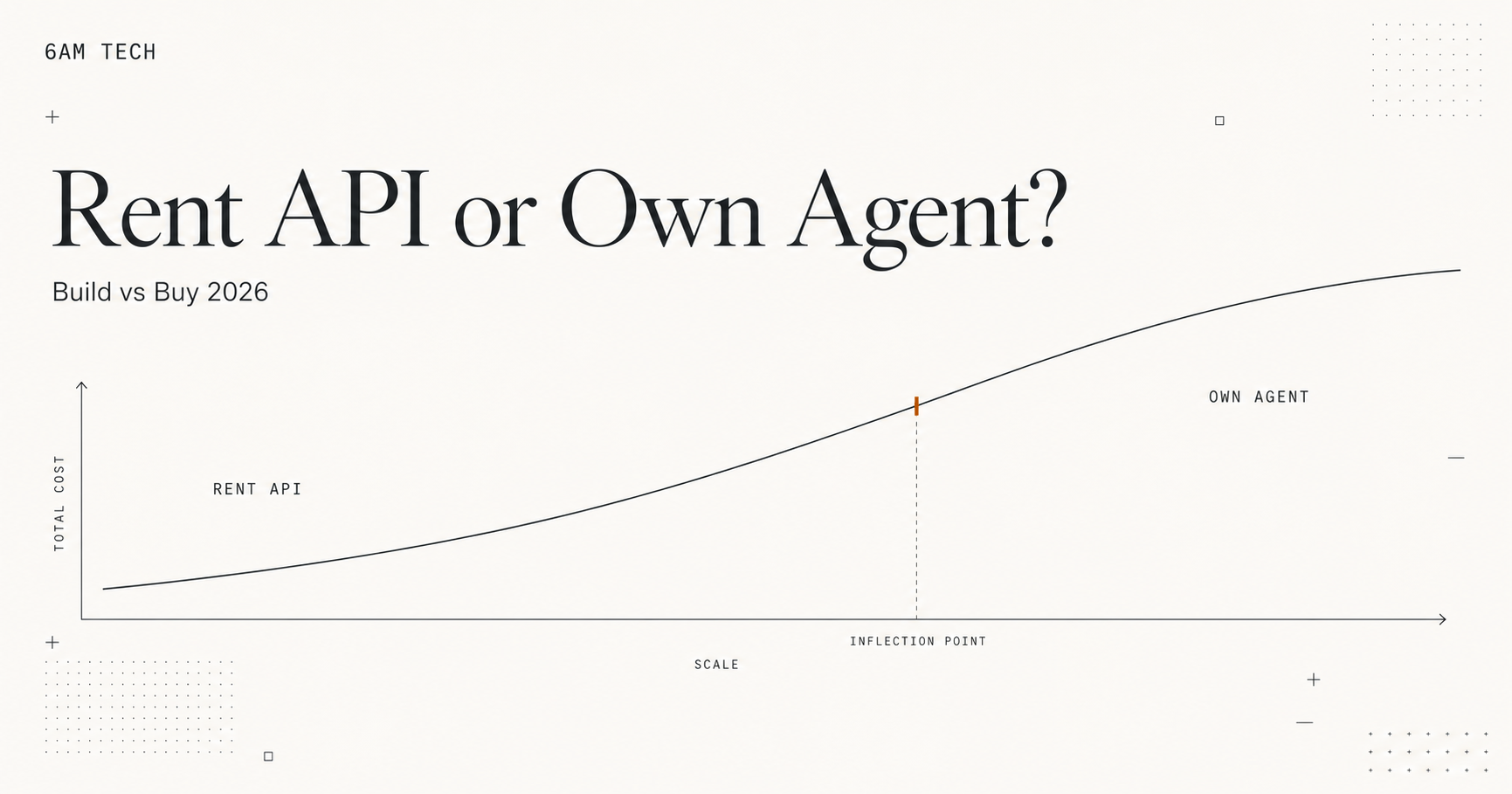
Renting a frontier API and owning your own agents aren't a binary — they're points on a curve that moves with scale. Here's an answer-first 2026 framework for when to rent, when to build, where the cost inflection point actually sits, and why the companies that cross the adoption threshold hire more, not fewer, people.
Getting an AI agent to run is not getting it to production. The blocker is no longer "can it complete the task" but "can we prove it behaved." Here are the three guardrails that close the last mile—runtime observability, a tamper-evident audit trail, and evaluation contracts—grounded in this month's evidence, from hash-chained audit logs to a 270-run contract pass rate.
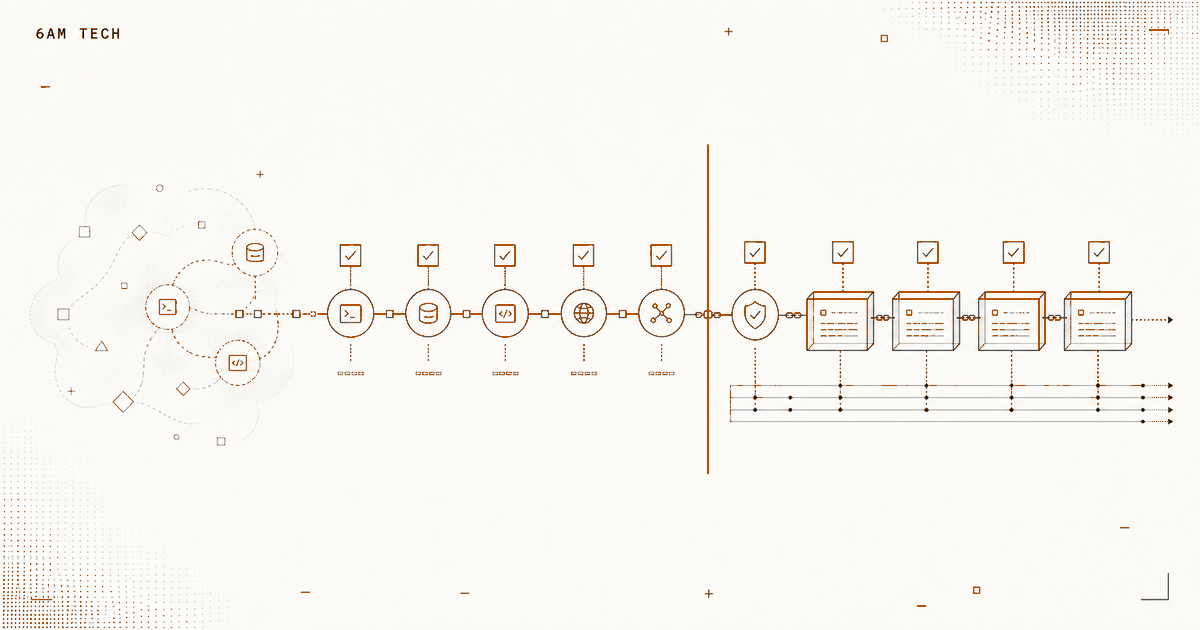
AI agents that dazzle in a demo often break the moment they touch real work. The gap is rarely the model — it's the missing production engineering around it. This guide breaks down the four real reasons enterprise agents fail and the FDE checklist for shipping one anyway.
Enterprise AI usually fails not because the model is weak, but because of three things: the data isn't connected, there's no scenario with clear ROI, and there's no forward-deployed engineering to make it work in production. Here's how to tell a pilot apart from real deployment—and a four-step path that moves AI from demo to daily business.
エンタープライズAI導入サービス。FDEが常駐し、AIを貴社の業務に根づかせ、コストを抑え競争に勝つ。
© 2026 6AM TECH · AI-Native Precision · 無断転載を禁じます