Rent an LLM API or Build Your Own AI Agent? A 2026 Enterprise Build-vs-Buy Framework
Renting a frontier API and owning your own agents aren't a binary — they're points on a curve that moves with scale. Here's an answer-first 2026 framework for when to rent, when to build, where the cost inflection point actually sits, and why the companies that cross the adoption threshold hire more, not fewer, people.
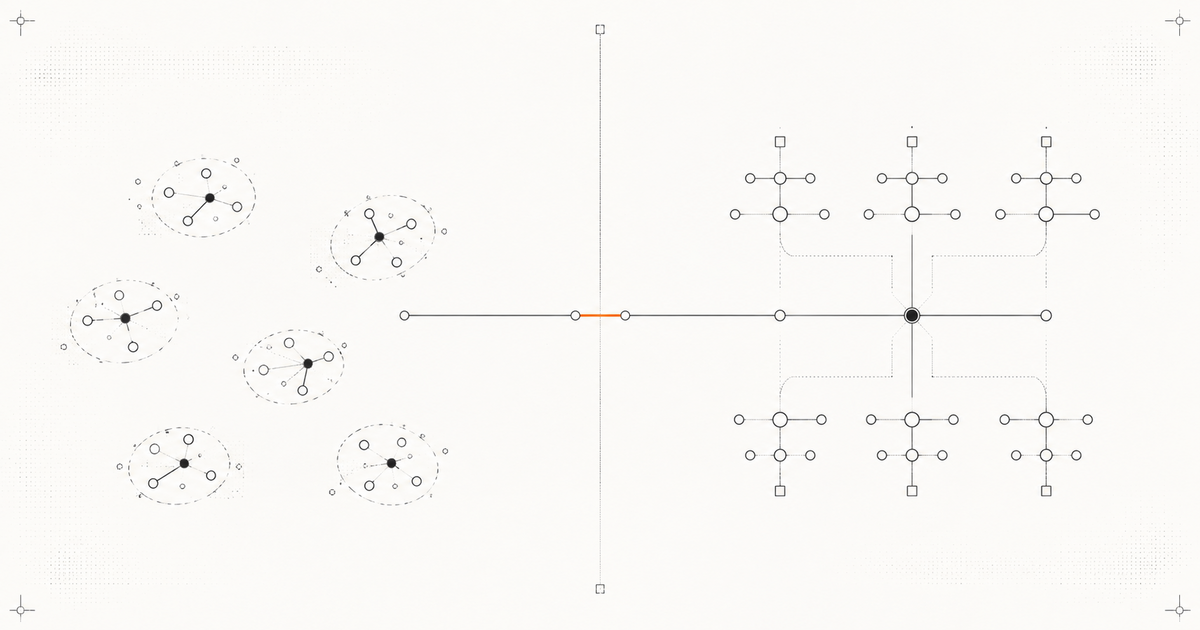
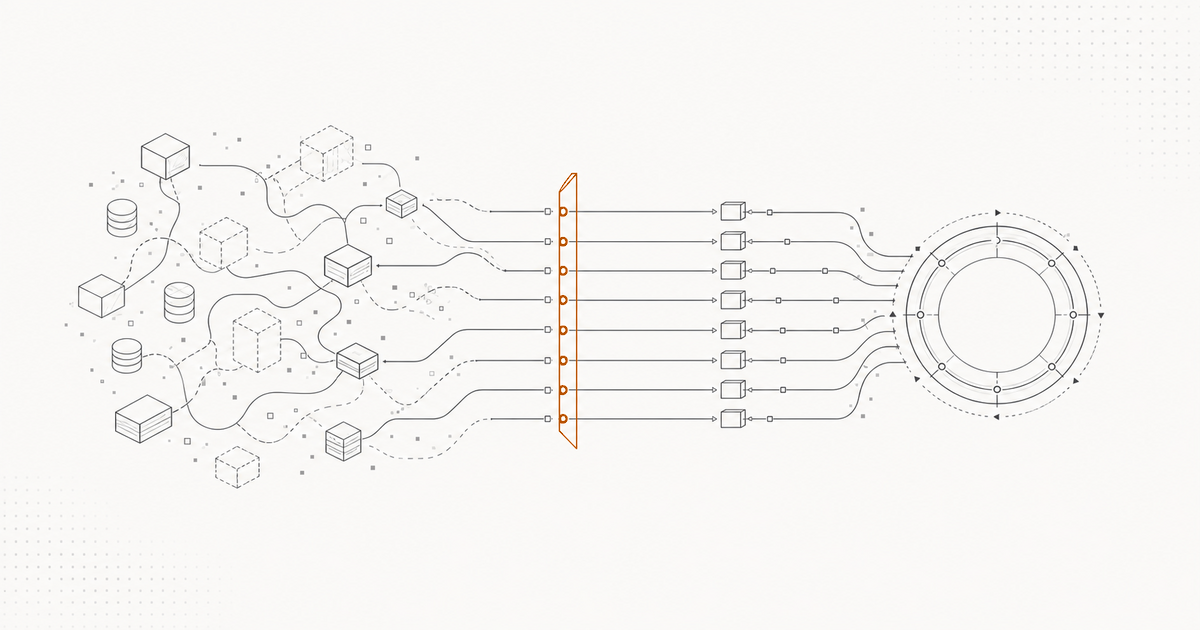
TL;DR — Build vs. buy is not a one-time binary; it's a curve that moves with scale. In the early stage, rent a frontier API to validate that the use case creates value. Once you hit the cost inflection point — and data sovereignty and iteration speed start to bottleneck you — migrate your core scenarios onto owned or custom agents. Hugging Face CEO Clem Delangue puts the underlying gravity plainly: companies "start with frontier APIs, but as they scale, cost pushes them toward open-source models". What decides the outcome isn't whether your model is the newest — it's execution.
| Dimension | Rent a frontier API | Own / custom agent |
|---|---|---|
| Cost structure | Pay-as-you-go, low to start; unit cost rises at scale | High upfront investment; marginal cost trends toward open-source at scale |
| Data sovereignty | Data leaves the enterprise boundary | Data stays inside your own stack (critical for compliance / sensitive cases) |
| Iteration speed | Constrained by the vendor's roadmap | Fine-tune and iterate on your own scenarios autonomously |
| Adoption threshold | Low (plug-and-play API) | High (needs a team + learning curve + governance) |
When should you keep renting frontier APIs?
Keep renting whenever you're still proving value, running low volume, using general-purpose capability, and carrying no hard compliance constraint. In the validation stage, a frontier API is the fastest way to answer the only question that matters early: does this use case actually move a business metric? Pay-as-you-go pricing means near-zero upfront cost, and you inherit the vendor's frontier capability without staffing an ML team. The reach here is real — Hugging Face's open models and datasets, now the de facto "GitHub of AI," are used by roughly half of the Fortune 500, which tells you how much of the market still starts — and stays, for a while — on rented capability. If your volume is modest, your requirements are generic, and your data isn't sensitive, renting is not a compromise. It's the correct first move, and premature self-hosting just buys you cost and complexity you don't yet need. (For why "just deploy it" is rarely as simple as it sounds, see why enterprise AI deployment is hard.)
When should you switch to building your own / owned agents?
Switch when scale, data sovereignty, or deep customization turn into your bottleneck — usually all three at once. This is the exact transition Delangue describes: companies "start with frontier APIs, but as they scale, cost pushes them toward open-source models." The trigger has three faces. First, cost: past a certain volume, per-call pricing compounds faster than the amortized cost of running open weights on your own infrastructure. Second, data sovereignty: for regulated or sensitive workloads, keeping data inside your own stack stops being a preference and becomes a requirement. Third, iteration speed: when you need to fine-tune for your own domain rather than wait on a vendor roadmap, ownership is the only way to move at your own pace. Delangue also names the strategic stake — his worry that a small number of large companies "could end up controlling everything" — which reframes an owned stack as a hedge, not just a line-item optimization. One caution: owning a stack is not a one-and-done win. Custom agents carry their own hidden operating costs, as we've covered in why AI agents fail in production.
Where is the cost inflection point? The adoption threshold and learning curve
The inflection point is a threshold, not a switch — and the data says it's higher than "self-hosting saves money" implies. The most rigorous read comes from the Ramp Economics Lab, which analyzed company-level spend across 21,000+ U.S. businesses. Two numbers reset naive expectations. The threshold: measurable returns showed up only in the top third of companies by per-employee AI spend — on the order of $30 per employee per month in the first three months. Below that, you're not "doing AI cheaply," you're under-investing past the point of payoff. The learning curve: adopters didn't compound immediately; the gains began to show 6–12 months after adoption and built from there. So the real cost question isn't "API bill vs. GPU bill." It's whether you're prepared to clear the spend threshold and stay in the game long enough for the learning curve to pay back — which is precisely why the naive "build to save money" case so often disappoints in year one.
How do Chinese enterprises run these numbers? The Qwen / DeepSeek self-hosting angle
For many Chinese enterprises the inflection point arrives earlier, because mature open weights and hard data-compliance requirements both push toward self-hosting sooner. The general curve Delangue describes — scale pushing cost toward open-source models — bends faster here for two local reasons. First, the open-weight tier is genuinely production-grade: families like Qwen and DeepSeek give teams strong models they can run inside their own boundary without depending on a foreign API roadmap. Second, data-residency and compliance pressure make "data leaves the enterprise boundary" a non-starter for a large class of workloads, which collapses the data-sovereignty column in the table above from a nice-to-have into a hard gate. Net effect: the same four dimensions apply, but the adoption threshold is lower and the sovereignty pull is stronger, so the rational moment to move core scenarios in-house lands earlier on the curve than it typically does elsewhere.
Does adopting AI mean layoffs or hiring? A counterintuitive finding
Companies that cross the adoption threshold tend to hire more, not fewer — the opposite of the prevailing fear. The fear has a famous author: in May 2025, Anthropic CEO Dario Amodei warned that AI could wipe out half of entry-level white-collar jobs within five years. Set that against the evidence. The same Ramp analysis found heavy AI adopters grew headcount by +10.2% in the two years after adoption, and entry-level roles by +12%, while light adopters showed no statistically significant change. That tension is the whole point: the prediction of contraction and the measured expansion aren't a contradiction so much as a sorting mechanism. The companies that actually cleared the threshold used AI to grow — including at the entry level the forecast said would vanish first. Which reframes the entire build-vs-buy question. It was never really about shaving cost; it's about who crosses the adoption threshold first and compounds from there.
What role does the FDE play in this decision?
The Forward-Deployed Engineer is the partner who gets you across the adoption threshold — hands-on, in your stack, owning the execution. Ramp's chief economist names exactly the gap an FDE closes: companies that are good at AI "have no incentive to publish their playbook, so it's hard to learn best practices without experimenting yourself." You can't buy the playbook and you can't read it; you have to run the experiment. That's the FDE mandate: sit inside your scenarios, clear the $30-per-employee-per-month threshold with intent rather than by accident, and carry you through the 6–12 month learning curve to the point where the curve starts paying back. It's also where owning a stack becomes a live responsibility rather than a slogan — once agents are in production, someone has to observe, audit, and evaluate them, which is the discipline we cover in agent observability, audit, and evaluation in production. The strategic frame, in Gavriel Cohen's terms, is the difference between AI as a "god" controlled by a small priesthood and a world where people wield their own capable agents: owning your agents is how you stay on the second side of that line. The FDE is how you get there.
Ready to find your inflection point? 6AM TECH's Forward-Deployed Engineers help enterprises validate, cross the adoption threshold, and own their AI stack — start with a diagnosis.